Friday, December 15, 2006

Lodi Memorial Patient Teaching (Cont.)

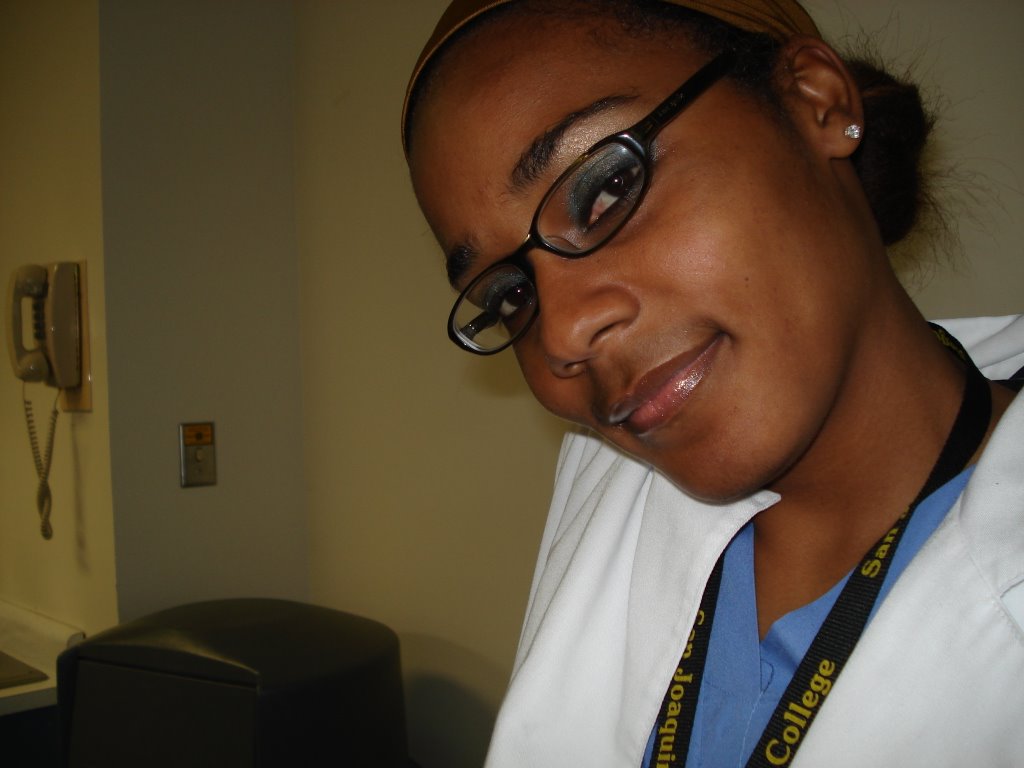
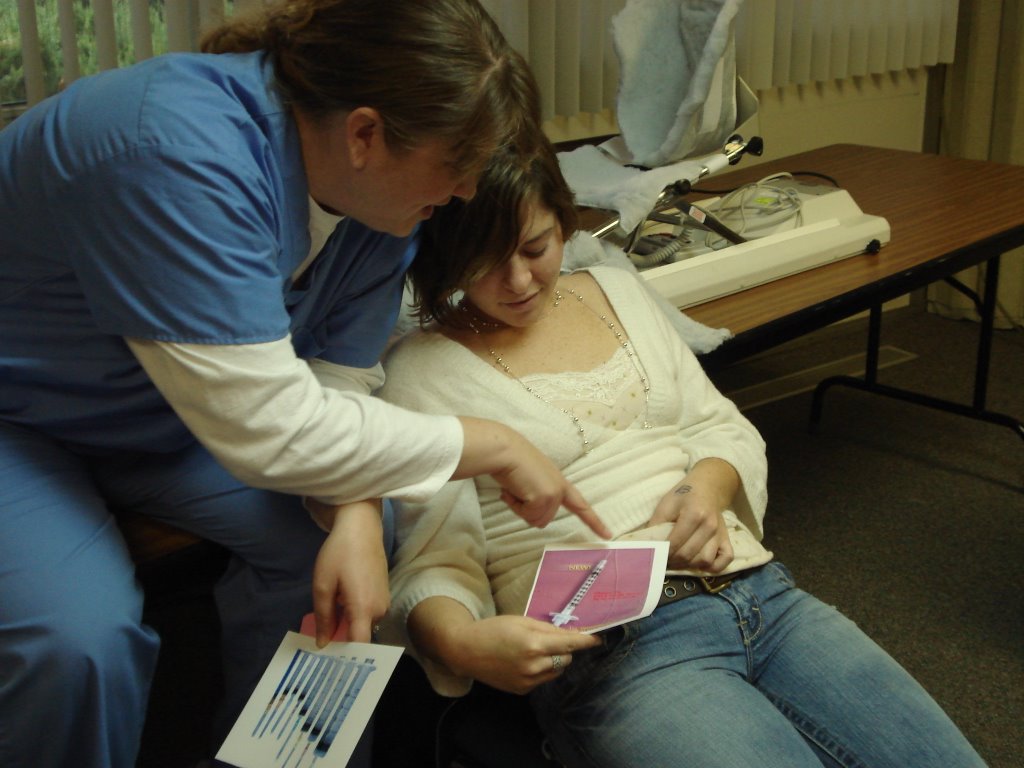
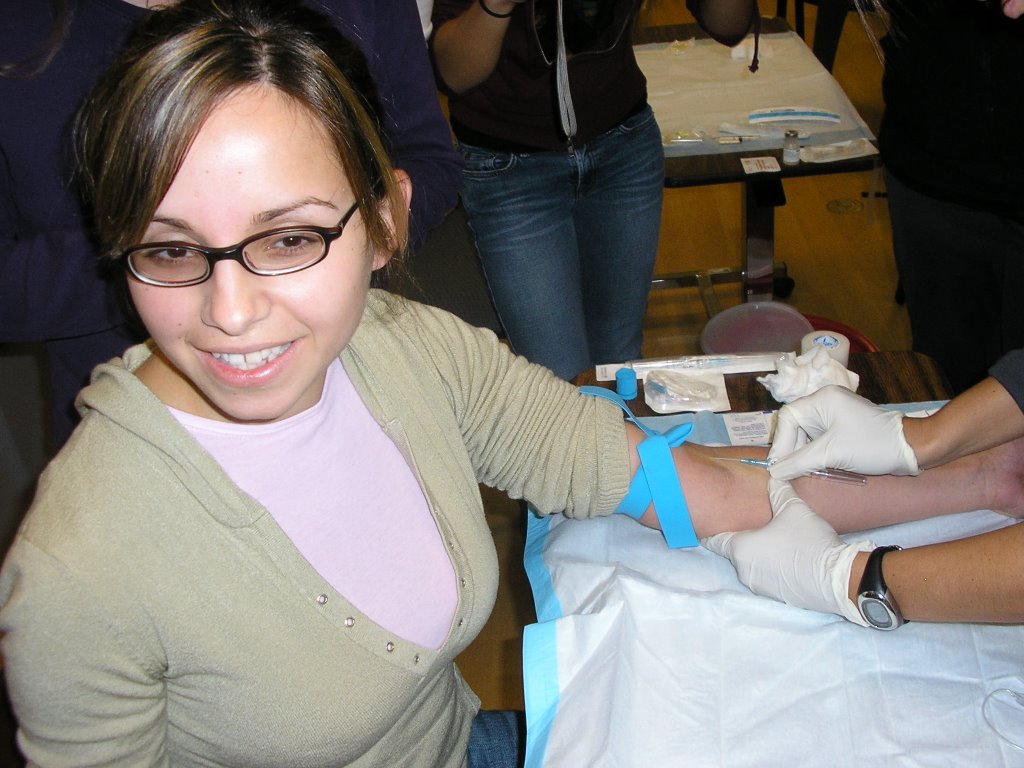
The Famous Teaching of Lindsey
Every Woman
Should Know How to Perform a Proper Breast Exam!
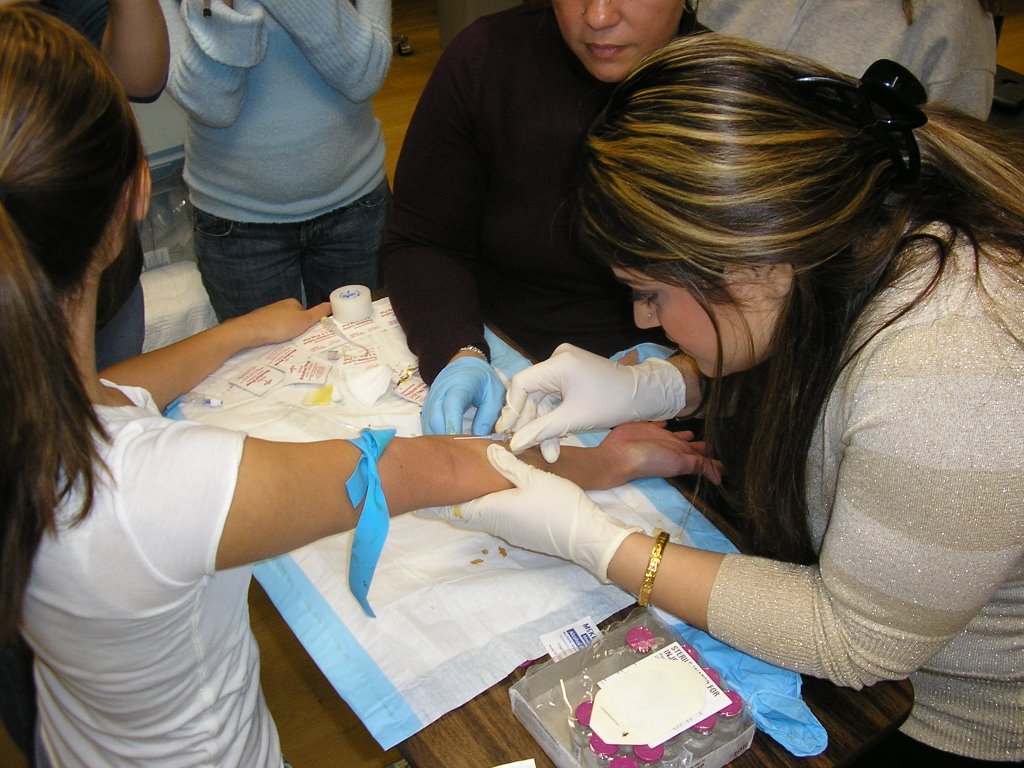
Jenn teaching Lindsey

Kat

Cindy teaching Kat (outside of picture)

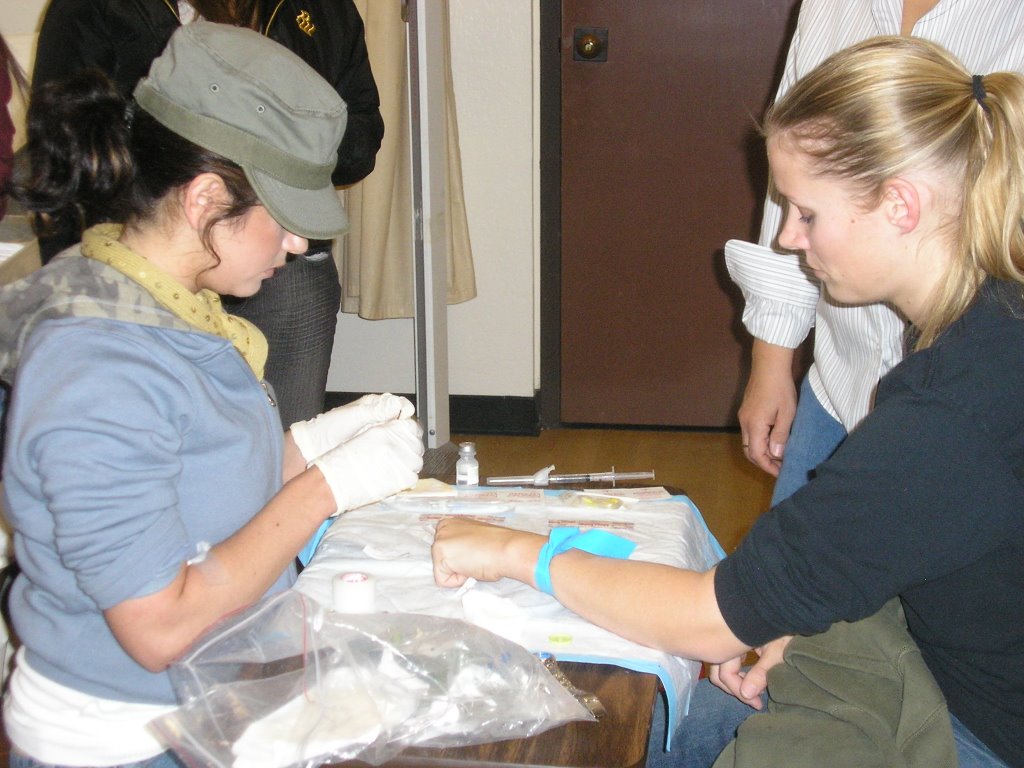
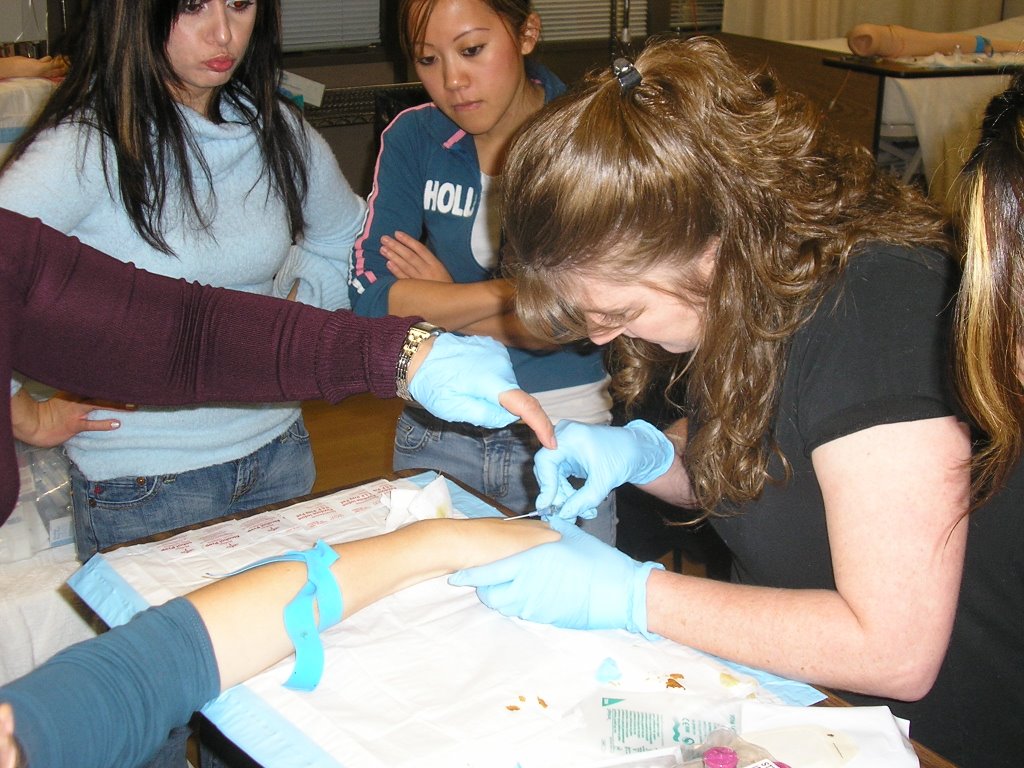
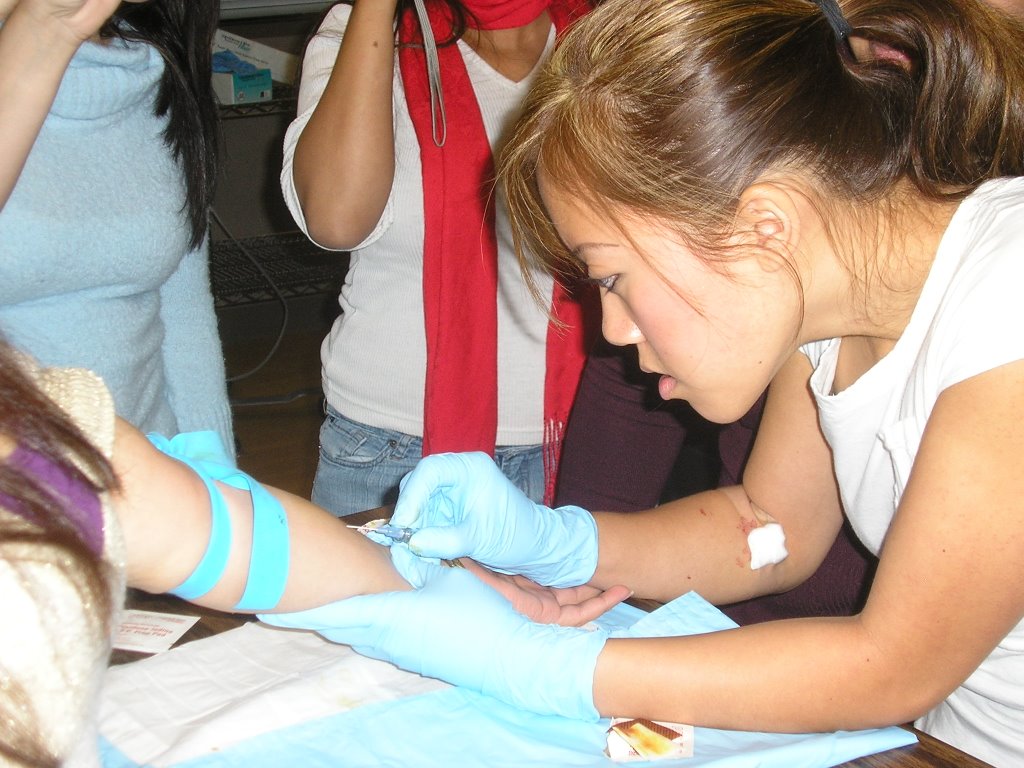
Jenny teaching Pam
Pam Teaching Jenny

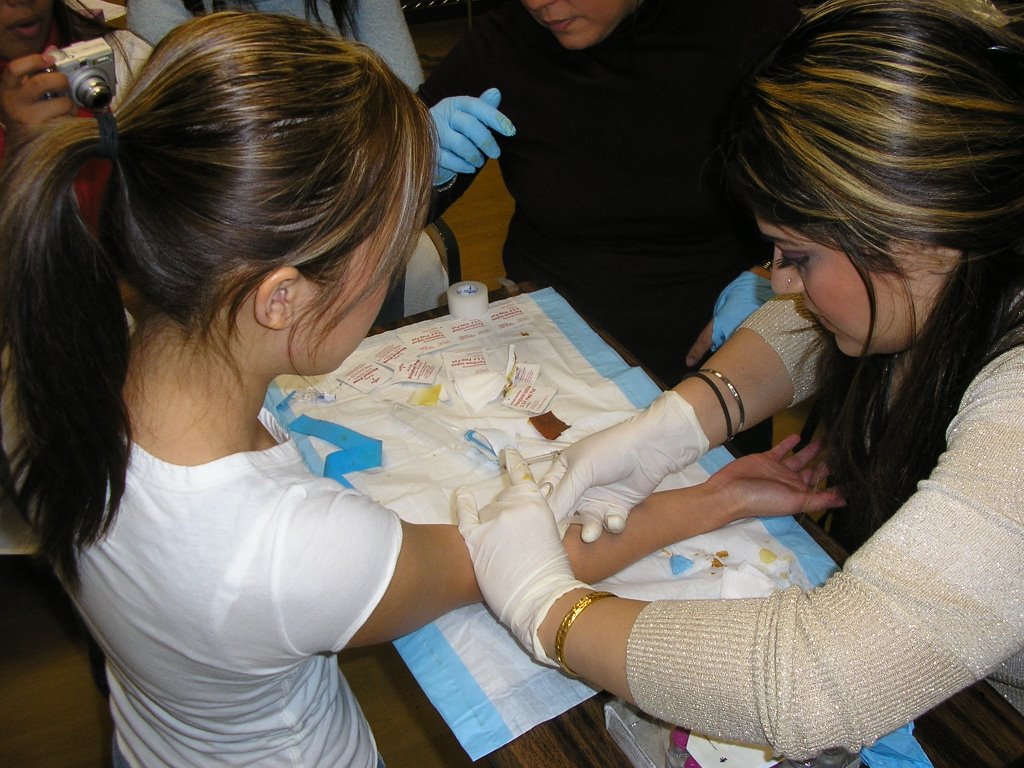
Crissy Teaching Lindsey


Krystal teaching Lindsey

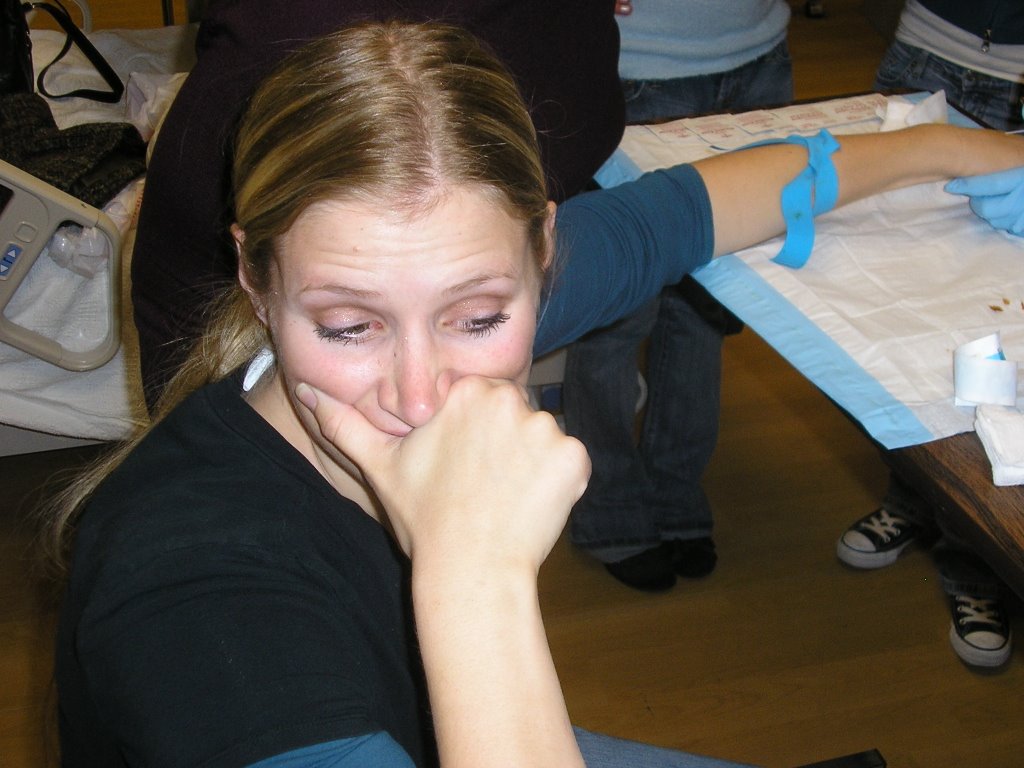
Kat teaching Cindy


Barb Teaching Jenn

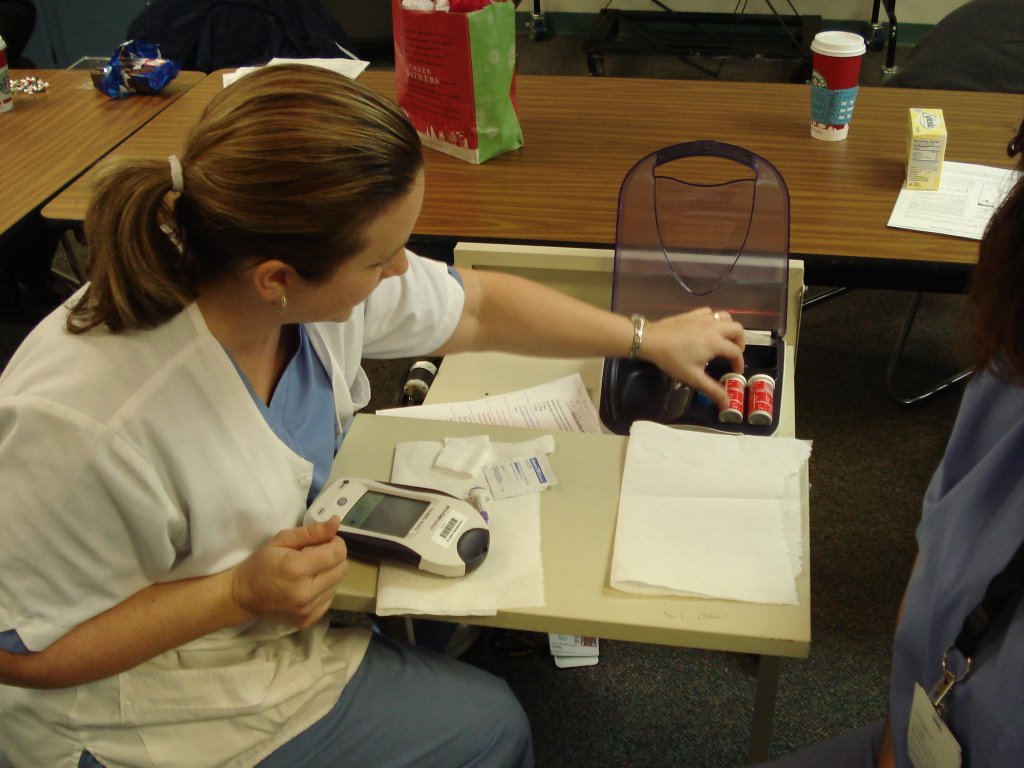
Lodi Memorial Patient Teaching Day

Nicole Porter II
A.K.A Nurse Nickey
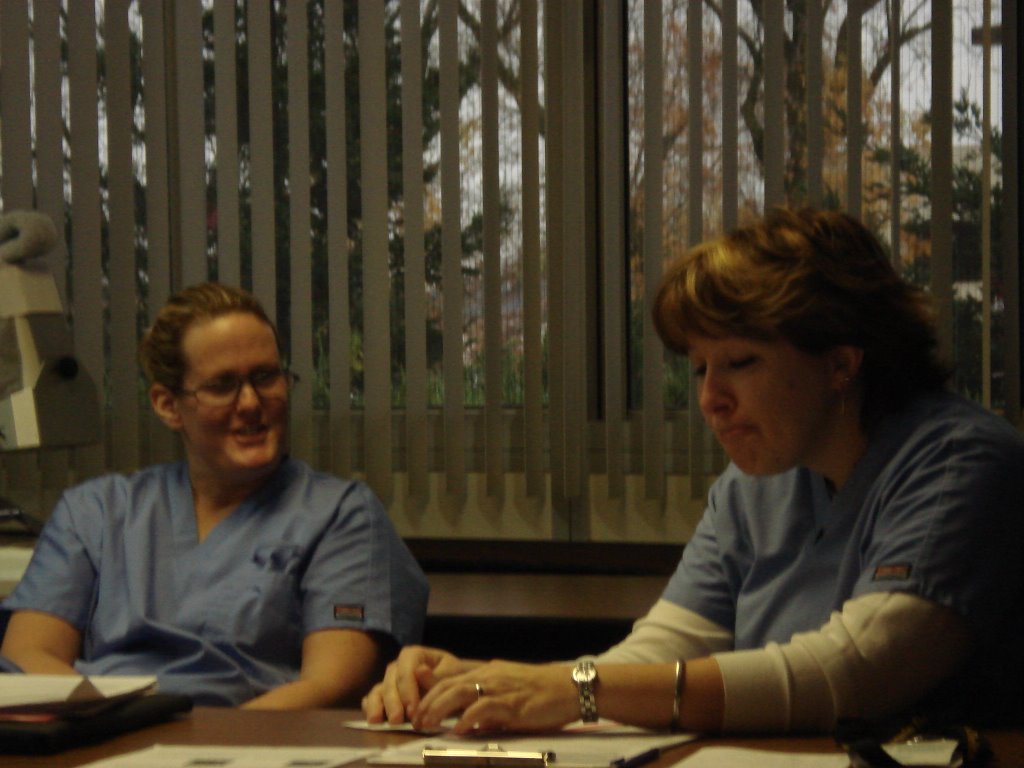
Mary Lou and (some of) The Lodi Gang


Jenny and Pam!

Look At The Love, We Are All Sisters Now!
I love you Guys

Thursday, December 14, 2006

Nurses Top List of Most Honest and Ethical Professions

Someone seeking a job that commands high respect need look no further than nursing. For the eighth consecutive year, nurses top Gallup's annual list of occupations rated for their honesty and ethical standards, earning high marks from more than four in five Americans. A combined 84% of Americans describe nurses' ethics as "very high" or "high." ...

http://www.galluppoll.com/content/?ci=25888&eref=aol

New post from R Sevilla

grades and calcs info for final

link to docushare post

Grades R Up!

Grades are posted for exam 4! Good Luck!!!

Monday, December 11, 2006

HOW CAN WE STAY UP ?

I know you guys already know all this... but i still think it's nice to share this info
so that EVERY ONE OF US WILL PASS N2 =)

-----------------------------------------------------------

Midnight Snacks for the Insomniac
Posted by S. Brent Ridge, M.D.
on Thu, Dec 07, 2006, 9:12 am PST
Post a Comment
Do you have so much to do during the day you literally forget to eat - but then find yourself making up for it before bedtime? If so, the types of foods you choose could make a big difference in the quality of your sleep.
First, let's look at the foods that are most likely to keep you tossing and turning.
Caffeine. Now, you don't need a doctor to tell you that caffeine will keep you awake, but it can lurk in unexpected places. Chocolate not only contains caffeine but also alkaloids which have a stimulating effect.
Alcohol helps many of us feel calm and relaxed - especially that half glass of wine after a long, hard day. While this may help you fall asleep initially, it greatly diminishes the quality of sleep by disturbing neurotransmitter production, including serotonin. Alcohol is also a diuretic and may keep you running to the bathroom all night.
Fatty foods take longer to work their way through your system, and the process of digestion can keep you awake. Fatty foods can also exacerbate heartburn.
Spicy foods make heartburn worse as well.
Artificial sweeteners like aspartame contain phenylalanine and aspartic acid, both of which are excitatory.
So what can you raid the refrigerator for to limit the sheep count? It has a lot to do with serotonin.
Milk (warm or not) contains tryptophan, a precursor to serotonin. It's tryptophan in turkey that makes us so sleepy after that Thanksgiving dinner. Cheese, chicken, soy, yogurt, nuts and seeds also have tryptophan. Eat these (and all foods) at least 45 minutes prior to your planned bedtime.
Complex carbohydrates like beans, nuts, seeds, sweet potatoes, apples, pears, and berries can also help increase serotonin levels. Watch out for simple carbs like rice, pasta, and white bread. The impact these have on blood sugar can disturb the sleep cycle.
Vitamins B6 and B12 are necessary for your body to generate serotonin. B6 can be found in turkey, chicken, spinach, whole grains and seafood and B12 in animal-derived products like eggs and dairy foods.
Magnesium-rich foods like leafy green vegetables, whole grains, and almonds can also facilitate sleep.

IV Day DHM


IV Day for DHM


IV Day for DHM


Sunday, December 10, 2006

Pharm Calc 4 & 5 test scores plus study questions

Calc 4 grades are here
link to Calc 4 grades

Calc 5 grades are here as well as the study questions which are on pages 6-11
Link to Calc 5 grades and Study questions

Good luck with the test folks!

Foods & Electrolytes

Hey,

I found this on 3rd semester's blog, thought it might be helpful........

Foods and Electrolytes

1. Dairy Products, Dark Green Leafy Vegetables, Canned Salmon are rich in which electrolyte?
2. Dried Fruit, Legumes, Green Leafy Vegetables, Dairy Products, Meat, Fish are rich in which
electrolyte?
3. Meat, Fish, Poultry, Milk Products, Legumes are rich in which electrolyte?
4. Bacon Ham, Processed Cheese, Processed Food, Table Salt are rich in which electrolyte?
5. Avocado, Baked Potato, Spinach, Meat, Dates, Raisins, Banana, Milk, Orange Juice are rich in
which electrolyte?

A Sodium (Na+)
B Magnesium (Mg+)
C Potassium (K+)
D Calcium (Ca+)
E Chloride (Cl-)


(answers under comments)

Friday, December 08, 2006

Tuesday, December 05, 2006

Bonnie

Hi everyone, if you have called or emailed Bonnie please do not think that she is just ignoring you. She has developed a bad inflammation of both her eyes and can’t see at all. She was seen in ER today instead of doing clinical. (A clinical experience of the bad kind.) She is on bed rest till the end of the week and WILL NOT be available by phone or email. If you need help with something, or have a question call me at (916) 600-7074 or email me at shadowphoenix56@sbcglobal.net. I will do my best to help you out. I do need to hear from Christine Moles!! Please be sensitive to Bonnie’s needs and not bother her at this time! Thank you.

Merry Christmas from Lodi crew

My friends. Hello everyone, and happy holidays. I would like to extend this very special invitation to you. You have a chance to help a very sick child, feel warm, and fuzzy all over. At the end of this invitation you will find a link to Project Linus. Project Linus has "blanketeers" who provide home-made blankies to some very deserving children. I am sure that most of you who recieve this email would say that you can not sew, but I am sure that you might know someone who is a great master of sewing, quilting, or crocheting. I invite you to collaborate with those talented friends, perhaps you could buy the materials and they could make the blanket and the two of you can donate this special gift together? The boys of our great troop, Boy Scout Troop 16 invite you to help them make their goals come to life. As it is the goal of our troop to send 50 blankets to Project Linus by the end of January. Please, email me with your commitment that you will be making a blanket for one of these very special children. Thank you in advance for your generosity and support of the boy's and most of all the Project Linus...you will be an honored, "blanketeer". As always, wishing you wellness Christine Moles and boysAny questions? Please call me at 209-547-0460 my email is rnstudychris@aol.com
Hi All, here are some practice questions all having to do with GI or Hypertension for our next exam.......I pulled them all off of the blog test bank that Bonnie maintains for us all


question-of-week Zollinger-Ellison syndrome (no answers provided)
esophageal-and-gastric-varices (no answers provided)
Oral-care (no answers provided)
ibd-qs (no answers provided) I think all the rest have answers provided
Qs-from-shelbas-cirrhosis-article
N2 Hepatitis Qs from required reading
Qs from Shelba’s Cirrhosis Article
Hep C and Depression
liver-failure-qs
N2 Qs For Exam 3 practice
The Silent Killer
HTN's Grip

Monday, December 04, 2006

Next Semester

I was wondering who's in my clinical groups next semester. I can't wait to meet more of you guys out there. I am Nursing 5 first MTW with Ippolitto and Nursing 4 next at St. Joes morning group.

A Christmas Poem....From Randy...MERRY CHRISTMAS!!!

The embers glowed softly, and in their dim light,
I gazed round the room and I cherished the sight.
My wife was asleep, her head on my chest,
My daughter beside me, angelic in rest.
Outside the snow fell, a blanket of white,
Transforming the yard to a winter delight.
The sparkling lights in the tree I believe,
Completed the magic that was Christmas Eve.
My eyelids were heavy, my breathing was deep,
Secure and surrounded by love I would sleep.
In perfect contentment, or so it would seem,
So I slumbered, perhaps I started to dream.

The sound wasn't loud, and it wasn't too near,
But I opened my eyes when it tickled my ear.
Perhaps just a cough, I didn't quite know, Then the
sure sound of footsteps outside in the snow.
My soul gave a tremble, I struggled to hear,
And I crept to the door just to see who was near.
Standing out in the cold and the dark of the night,
A lone figure stood, his face weary and tight.

A soldier, I puzzled, some twenty years old,
Perhaps a Marine, huddled here in the cold.
Alone in the dark, he looked up and smiled,
Standing watch over me, and my wife and my child.
"What are you doing?" I asked without fear,
"Come in this moment, it's freezing out here!
Put down your pack, brush the snow from your sleeve,
You should be at home on a cold Christmas Eve!"

For barely a moment I saw his eyes shift,
Away from the cold and the snow blown in drifts..
To the window that danced with a warm fire's light
Then he sighed and he said "Its really all right,
I'm out here by choice. I'm here every night." "It's my duty to stand
at the front of the line,
That separates you from the darkest of times.
No one had to ask or beg or implore me,
I'm proud to stand here like my fathers before me.
My Gramps died at 'Pearl on a day in December,"
Then he sighed, "That's a Christmas 'Gram always remembers."
My dad stood his watch in the jungles of 'Nam',
And now it is my turn and so, here I am.
I've not seen my own son in more than a while,
But my wife sends me pictures, he's sure got her smile.

Then he bent and he carefully pulled from his bag,
The red, white, and blue... an American flag.
I can live through the cold and the being alone,
Away from my family, my house and my home.
I can stand at my post through the rain and the sleet,
I can sleep in a foxhole with little to eat.
I can carry the weight of killing another,
Or lay down my life with my sister and brother..
Who stand at the front against any and all,
To ensure for all time that this flag will not fall."

"So go back inside," he said, "harbor no fright,
Your family is waiting and I'll be all right."
"But isn't there something I can do, at the least,
"Give you money," I asked, "or prepare you a feast?
It seems all too little for all that you've done,
For being away from your wife and your son."
Then his eye welled a tear that held no regret,
"Just tell us you love us, and never forget.
To fight for our rights back at home while we're gone,
To stand your own watch, no matter how long.
For when we come home, either standing or dead,
To know you remember we fought and we bled.
Is payment enough, and with that we will trust,
That we mattered to you as you mattered to us."

You Are A Nursing Student

xpost from another site - author unknown


You Are A Nursing Student

You will be mentally stressed.
You will be emotionally challenged.

You will learn how to work together.
You will learn to work alone.

You will learn when to speak.
You will learn when to be silent.

You will learn when to lead.
You will learn when to follow.

You will be constructively criticized.
You will be praised.

You will shed a few tears.
You will share in each other's laughter.

You will learn the need to help each other.
You will learn to help yourself.

You will learn to be part of a group.
You will learn to be yourself--an individual.

You will learn responsibility.
You will learn discipline.

You will learn these things because someday someone's life will depend on
you.

You are a nursing student
You will graduate------

You will be, in all it's wonder and glory, a Nurse.

New Pharm exam scores posted

link to Docushare

Saturday, December 02, 2006

Date of the Tea?

I can't seem to find the date of the welcome tea. If possible, are you interested in having any students from the 3rd and 4th semesters or some that have actually survived the entire nursing program, present to answer questions at a side table?

Have you thought about setting up a bank of nursing laptops (borrowed from the computer lab) on a side table and giving online tours to the new students, showing them how to access their student email, blogs, Nursing 101, docushare, test bank and other resources? You can actually help one or more of them set up their new blog on the spot and start sending out invites on the same day. By doing this, previous administrators and mentoring bloggers could be added right away to help get their blog flowing and on track. They could always change their layout and add an intro later. You can use other semester students to give these info tours to free up your helpers also.

Friday, December 01, 2006

Opinions?

What do you think of this song as background music for part of the photo presentation at the incoming sn tea?

link to song

Dining for the Tea

Hey Denise,
I know you all have alot to deal with, putting together the tea. If you don't mind, if you give me the amount I will have to work with; I will take responsibility for the food. I will touch basis with you every Friday. I have totally ruled out Delta's culinary arts Dept, as Barbara has probably told you. Let me know, and little does she know but I will also put Jenifer on the job also. I think the two of us can stir somthin' up!?!

Nicole S. Porter II

tea

Does anyone have some ideas for a brunch menu? We are not sure if we are going to have this catered or not. We need food for 130 people.Can people put together some menus that might work, Thanks

Thursday, November 30, 2006

grades are up!!!

Tuesday, November 28, 2006

More practice questions for Gerontology

http://www.seniorjournal.com/KnowSeniorsQuiz/Quiz1.htm

I found this website that seems to be a reliable source. It has 16 different quizzes and explanations for each answer. It helped me!

3rd Hep B reminder

Just got mine today, so thought I'd share ;-)

Titer 6 - 8 weeks after.

Monday, November 27, 2006

Photos For the Tea

Hello Danielle,
I haven't forgotten about the pictures for the Tea, I have many! I think I am going to bring my laptop and a disk, so we can figure out how to put the pictures on a disk, because I think I have too many to e-mail! Talk to ya later!!!

PS: Hello everyone else!

Sunday, November 26, 2006

answers

Denise Williams said...
1c2c3a4a5b6d7c8b9b10d11a12b
13c14a15b16b17d18d19c20c21b
22c23d24b25a26c27d28b29d
30a31b32b33c34d35d36b37c
38a39c40b41a42d43c44d45a
46c47d48c49b50a51a52c53a
54d55c56d57a58c59d60a
There are 5 wrong answers
and I don't know which 5 are
wrong Please help

answers to kelly's questions

I have answered 55 questions correctly out of 60.Has anyone else scored higher than this on the practice questions. If so, we can compare answers. Thanks

Wednesday, November 22, 2006

PRACTICE Q's FOR GERONTOLOGY

Hi Everyone !!

Here are some practice questions for the Gerontology Exam next week.............

"Gobble, Gobble, Gobble"

Low H & H QGeriatric test mix

Tuesday, November 21, 2006

Question of the week - 11.20.06

A 72 year-old client is scheduled to have a cardioversion. A nurse reviews the client’s medication administration record. The nurse should notify the health care provider if the client received which medication during the preceding 24 hours?

1. Digoxin (Lanoxin)
2. Diltiazem (Cardizem)
3. Nitroglycerine ointment
4. Metoprolol (Toprol XL)

HELP!!!!!!!!!!!!!!

Calling out to all future nurses
I am interested in going to San Joaquin General for Nursing 4
but the section got full before I got to register.
Is anyone interested in switching?
Please let me know. ASAP
Thanks
Jennifer Stevens

My home email is jenn@telnetcom.us

Monday, November 20, 2006

Photo Call

Embarrass your friends AND scare the newbies out of their socks!!!

I am organizing our photos into a presentation for the incoming ADN tea. If you have any photos, and I mean ANY photos of our class and those crazy things we do, please email them to me at kdaniellem@yahoo.com

If you need help figuring out how to send them, or need film photos scanned, etc. just let me know and I'll be happy to figure something out.

Suggestions for appropriate musical accompaniment also appreciated.

Thanks,
Danielle

Saturday, November 18, 2006

Fun for all

Hey, a few of us were talking about going somewhere after nursing 2 is over. I hope it is not to early to be thinking about this, but we were thinking about a night or two at Tahoe or Reno. We could fill our cars to the brim and pile into rooms to keep costs down. It would be a day or two of well needed and deserved fun for all. What does everyone think?

Friday, November 17, 2006

Now That, That Is Over!

I haven't entered in the blog for a while now (my apologizes)! This past week has been a little much for me, I am sure I am not alone. I just wanted to send out a note to you all. Some of us are not doing, as well as we would hope to be doing. It is our job as classmates to help each other out, if you know someone that is not doing well; please reach out to them. We don't have to compete against each other. Success always feels better when you can share it, lets succeed together!

Thursday, November 16, 2006

Pain and the Nursing Process

Answers to these questions can be found in this Pain article from Wild Iris Medical Information Nursing CEUs.
I have not had a chance to answer these yet. Post your answers in the comments, then I can add this to the test bank if you think it is beneficial.

1. The primary source of information about pain is the:
a. Parent or guardian.
b. Nurse or caregiver.
c. Attending physician.
d. Person in pain.

2. A pain history interview includes questions about all of the following issues except one. Select the issue that is not included in a pain history.
a. What triggers the pain or makes it worse
b. The intensity of the pain
c. Names of persons who have tried to help
d. The location of the pain

3. The two primary diagnoses for pain identified by the North American Nursing Diagnosis Association (NANDA) are:
a. Adult and pediatric.
b. Acute and chronic.
c. Short-term and long-term.
d. Physical and psychological.

4. Adjuvants are drugs that address:
a. Symptoms that accompany pain.
b. Central nervous system pain.
c. Pain caused by tissue damage.
d. Derivatives of opium.

5. Most nonopioid analgesics are potent:
a. Anti-emetics.
b. Antibiotics.
c. Anti-inflammatory agents.
d. Sedatives.

6. In general, nonsteroidal anti-inflammatory drugs (NSAIDs):
a. Include such drugs as Tylenol.
b. Act on mu and kappa receptors in the brain.
c. Are classified as co-analgesics.
d. Affect peripheral nerve endings at the injury site.

7. Opioid analgesics that bind to mu receptor sites and block pain impulses are:
a. Antagonists.
b. Full agonists.
c. Partial agonists.
d. Mixed agonist-antagonists.

8. Many adverse symptoms of opioids are due to their effect on:
a. Body systems other than the CNS.
b. Prostaglandin production capabilities.
c. Glucose metabolism and its byproducts.
d. The complex mind-body interaction.

9. A need to increase opioid dosages for reasons other than the physical adaptation of continuous use is called:
a. Pseudotolerance.
b. Drug tolerance.
c. Psychological dependency.
d. Addiction.

10. A placebo violates the ethical principles of honesty because it:
a. Strips individuals of the right to make decisions about themselves.
b. Has been used by hucksters throughout history.
c. Seeks to deceive the person who takes the placebo.
d. May be used in research to study the effects of drugs.

11. Cognitive-behavioral interventions are used for all of the following reasons except one. Select the incorrect reason.
a. Anxiety and fear reduction
b. Greater sense of control
c. Greater insight to psychic conflicts
d. Alter perception of pain

12. Rhizotomy and cordotomy are:
a. Considered low-risk pain-relieving measures.
b. Indicated for specific types of pain.
c. Both performed in conjunction with a laminectomy.
d. Surgical procedures that involve nerve destruction.

13. Evaluation is a critical phase of nursing care because it tells us:
a. We need to document more thoroughly.
b. The importance of ethical principles to the practice of nursing.
c. The dangers inherent in opioid dependency.
d. The degree to which an intervention achieved an expected outcome.


NursingCEU.com is a division of Wild Iris Medical Education

SJDC ADN Class of 2008

Grades are up for Exam 2 on Etudes!

Monday, November 13, 2006

Question of the week 11.06.06

A nurse is providing care to a 63 year-old client with pneumonia. Which intervention promotes the client’s comfort?

1. Increase oral fluid intake
2. Encourage visits from family and friends
3. Keep conversations short
4. Monitor vital signs frequently

Sunday, November 12, 2006

Message from R Sevilla (N3) - from Docushare

Hello All, I have received multiple e-mails from students who have concerns regarding the last calculations exam (Calc 3) and their Calc grade. I will stay after lecture for those students who want to review their exam and how I graded them. I will be posting the scores for Theory Exam 4 later this evening. It will not include any other theory exam scores. I will be posting all of the theory scores (Theory 1-4) by Wednesday night. For tomorrow, I will be lecturing first, and Calculations Exam 4 will be in the last hour of class. I will have an outline posted on DocuShare by tonite (approx. 10pm). Richard

Saturday, November 11, 2006

Pain Questions for practice.....

Hi All,

Here are some pain Q's from the test bank......... I think the N4 pain questions are deeper than what we need to know right now, but it sure won't hurt to try and gain an understanding of them.........

PAINN4 Pain testAlternative Therapy QOWPain Qs

Friday, November 10, 2006

Exam 2 Study Guide

Has anyone been able to down load the study guide for exam 2 on pain. My computer wont let me. If someone could cut and paste it to the blog that would be very much appriciated.
Thanks Barbara

Thursday, November 09, 2006

Have a great weekend Ladies and Gentlemen!

Ok, Now That Cancer Test Is Over; I Feel Better! I Hope You All Feel Better Too. Have a great weekend!!!

N2 Exam 1 Grades

Grades are posted on Etudes!

Wednesday, November 08, 2006

Calc 3 Grades

The grades are up on docushare. http://docushare.deltacollege.edu/dsweb/View/Collection-6540

I hope the web addy I put here works. I'm not sure how to link it.

Tuesday, November 07, 2006

Great Practice Cancer Questions!!!

Hi All,
Just wanted to let you all know that the test bank that Bonnie has been so kind to share with all of us has many, many questions on cancer..........I found them very helpful in understanding and implementing some of the information from our text...........GREAT PRACTICE FOR OUR EXAM ON CANCER THIS WEEK TOO!!

Good Luck to All & Happy Studying

CANCER
Practice Cancer Qs More Cancer Qs Cancer Q of WCancer practiceCancer Qs Cancer Drug Practice Pain and Cancer Qs Cancer Q of the week Lymphoma and Leukemia Qs Cancer Development

REMINDER!!!

Hi, I just wanted to remind all that our complementary medicine assigment for clinical is due next week! Just a friendly reminder :)

Saturday, November 04, 2006

Friday, November 03, 2006

Preparing for Clinicals...

Article from the Evolve webpage...


How Can I Be Most Prepared for Clinicals?

By Tina Klasing, nursing student

Although a nursing student may never feel entirely prepared or organized when walking onto the nursing unit, here's some advice from someone who's been through it. Keep in mind that it's all a learning process, starting with day one of clinicals all the way through the end of your degree. Remember to take baby steps, try not to stress, get help from fellow students — working together helps things go a lot smoother. Ask questions and communicate with the staff on the unit — most are willing to help. Clinicals are great experience for what you will be getting into after completion of your degree.

Bring the resources you'll need.
Be sure to always bring necessary resources with you to clinicals such as a lab book, drug guide, drug cards, IV drug guide, and pocket dictionary.

Know your patient.
Some nursing schools allow you to go the day before your actual clinical and gather information on your patient. Take advantage of this opportunity and the extra time you're given to prepare.

Get the facts.
In other nursing schools, you'll find out the morning of clinicals who your patient will be. This gives you a very short time to gather information. Usually you will be given a printout of the patient's name, age, weight, diagnosis, date of admission, and doctor's name. You will also need a medication administration report for this patient to look up information about the patient's medications before administration. Be sure to review the patient's chart before leaving, making sure you have all the up-to-date information.

Do your research.
As soon as you know who your patient will be, begin gathering any information you may need such as your patient's diagnosis, how that diagnosis is treated, what you will need to do for that patient, what their vitals have been, and any lab values. Be prepared to state the medications your patient is on and why, as well as any side effects they may have. If the patient has a schedule such as PT/OT, OR, exams, or procedures, you should figure out how to schedule your day around these events. After evaluating lab results and identifying abnormal values, research how this will affect your patient physiologically and what clinical manifestations you need to assess for during your shift.

Take note of your surroundings.
During the first day on the floor, pay particular attention to where important things are located, such as assignment sheets, charts, vital sign equipment, medication room, and bathing supplies.

Know what's expected of you.
Find out what nurses on the unit expect of you, such as when and where the report on your patient will be given, as well as how vital signs, intake and output (I&O), and your nursing assessment are documented. You'll also want to find out the preferred pattern of care, including when to be ready for report, when chart entries must be made, when vitals are taken, when mealtimes take place, and when patients should receive baths.

Have relevant drug facts on hand.
Medication administration is probably the first thing you will do when beginning your shift, so be sure to have your drug information ready. The most convenient way to carry this information with you is to have a set of drug cards. Drug cards allow you to pull out cards on the drugs your patient is taking and carry them easily in your pocket. You can either make drug cards on your own, or buy drug cards that you can reference easily. Buying the drug cards is much easier, and ensures accurate information. You may also want to bring your drug handbook with you to clinicals in case your patient has started on a new medication during your shift. You will be expected to know the effects of any new medications.

Write down important information.
Locate your patient and the nurse you will be working with, and liaise closely with your patient's nurse throughout the day. Don't be afraid to ask questions. Use a sheet of paper, note card, or a school-provided paper to organize all the information you will need on your patient. This may include name, diagnosis, age, weight, vitals, medications and times, I&O, IV fluids and pump clearing times, and any report information. Do not make the mistake of thinking you can remember everything about the report. Write down all the information you are provided.

Prioritize.
Your initial head-to-toe patient assessment will be done in the morning. If you have more than one patient, look at your patients' histories and prioritize which patient you will see first according to diagnosis and/or needs. If you anticipate that you may need to spend more time with the patient who needs to be seen first, go in to check in on your other patient beforehand. Introduce yourself and let them know you will be returning to do their assessment.

Do your charting on notebook paper first.
Make yourself familiar with the charting for the unit you are on, and know what your instructor expects of you. It helps to do your charting on paper first, show your instructor, get it approved, then put it in the chart. If you have a lot going on and it is difficult to chart things done at any particular time, make notes on your own paper and refer back to them when charting later.

Be prepared for your off-going report.
Throughout the day, write down important issues and events so you can be sure to let the nurse know them. Report any findings and/or assessments that you made during your shift. Examples: vitals, labs, procedures, results, how the patient ate, I&O, medication changes, and any upcoming procedures that the nurse may need to do on her shift.

Protect your patient's confidentiality.
Remember that your patient's confidentiality is a serious consideration. Be careful not to leave your notes where others can see them, and never talk about patients in public corridors and/or elevators. You never know who is standing behind you — it just may be your patient's spouse or coworker.

A Typical Day
  1. Arrive at clinicals on time, copy the updated medications and look them up. Review your patient's chart for all information you will need in order to care for that person during your shift.
  2. Listen to the report and write all information down.
  3. Perform focused assessment/head-to-toe assessment and report findings. Chart per flow sheet according to the guidelines of that unit.
  4. Assist patient with personal hygiene, which includes bathing, combing hair, brushing teeth, etc.
  5. Perform or assist with ordered procedures and nursing interventions. These may be dressing changes, ambulating your patient, IV insertions, etc. Be aware of what you can and cannot perform with or without your instructor at the bedside with you.
  6. Take vitals according to unit policy and your patient orders. Chart those according to policy.
  7. Prepare patient for his/her meals. Chart amount eaten and fluid intake.
  8. Practice your charting on paper and get it approved by the instructor before charting in the patient's chart.
  9. Calculate intake and output, clear IV pumps, feeding pumps, drain foley catheters, etc. and chart all according to unit policy.
  10. Prepare and provide an accurate and comprehensive report, whether verbal or on tape, and give that to your nurse. Be sure all charting is complete and attend a post conference.